Japanese craftsmanship is word-renowned for its quality and deep history. Between the traditional crafts that are still being produced today, to more contemporary crafts made with the same artisanship and handiwork as the traditional crafts, there is a lot to cover. How well do you know Japanese traditional and contemporary crafts?
Traditional Japanese crafts include the more well-known kimono, lacquerware, and origami as well as lesser-known leatherwork, stonework, and dolls. This is your complete brief into the world of Japanese crafts. Find links below to more detailed articles on the individual categories and crafts. If a heading has a link attached to it, click it to find a more detailed article on that particular craft.
This index will be a constant work-in-progress as we strive to make an extensive database for all things Japanese Traditional and Contemporary Crafts, so please check back regularly to see updates as articles and crafts are added to the Rambling Merchant blog and shop!
Textiles and Fabric

When you think of Japan and fabrics, your first thought is probably kimonos. While the kimono is the most famous, there are lesser-known and less thought of Japanese fabric crafts that are commonplace in Japan. Kimonos and yukatas each serve different uses and brocades, tapestries, cloth, and embroidery are often overlooked in this category.
What’s The Difference Between a Kimono and Yukata?

Kimono
While “Kimono” literally translates as “worn thing” or “clothing”, it is synonymous with the traditional clothing that became popular in the Heian Period (794-1185). The kimono became an everyday article during the Kamakura Period (1185-1333). By the Edo period (1603-1868), it had become a unisex outer garment. The kimono was worn by everyone, regardless of age, sex, or class.
The color combinations used on the fabric of the kimono have traditionally represented seasons. Colors were also used to represent family or political ties. The intricate patterns could be considered works of art and unique kimonos were passed down generations within families.
In the modern age, kimonos are associated with Japanese tradition around the world and are still worn for certain holidays in Japan. Shichi-Go-San (Seven-Five-Three), a holiday celebrating children aged seven, five, and three is a common time for children to be seen in the traditional dress. Coming of Age Day and college graduations are also celebrations where kimonos are often seen. All over Japan there are kimono rental shops for tourists (domestic and international) to take one out for a day. These are especially popular in cities with historical landmarks and areas such as Kyoto.
Yukata

Yukatas are often mistaken for kimonos, however there are some key differences. Kimonos are generally silk or brocade and are heavier with a full collar. They are the more formal of the two. Yukatas are lighter, typically made of cotton, and generally less expensive. Yukatas are commonly worn to summer festivals and fireworks. Yukatas are commonly found in hotels in Japan to be worn as bathrobes. In some resort towns it is common to see guests leaving the hotel to walk around in the evening wearing their yukatas.
Brocades

Embossed, woven, and embroidered silk has history all over the world. China and Korea brought silk farming and fabric to Japan during the 5th or 6th century. Silk weaving became an occupation in Kyoto during the Heian Period (794-1185) in an area known as Oribe-Cho, where craftsmen gathered and settled. The most famous traditional Japanese silk brocade is known as Nishijin-ori. Meaning “western military encampment brocade”, Nishijin-ori got its name after a civil war during the Muromachi Period (1336-1573). Craftsmen were able to return to their craft in Nishijin in western Kyoto when the fighting ended in the area after the war.
Tapestries

The techniques for making tapestries came to Japan from China during the Muromachi Period (1336-1573). The early 17th and 18th centuries saw the height of production during the Tokugawa Period (1603-1867). Tsuzure, Japanese for tapestry, was primarily used to decorate robes and garments, for hanging on walls, and for gift wrapping. Thick cotton threads covered with silk, gold, or silver creates a more pronounced relief surface in traditional Japanese tapestry versus Chinese tapestry.
Wrapping Cloth

Furoshiki, Japanese wrapping cloth, has a longer history than tapestries. Popular for about 1200 years up until the Edo Period (1608-1868). The custom started during the Nara Period (710-784) as a way to store valuables for emperors. In the Heian Period (794-1185), it was further used to wrap and carry the clothing of nobility.
Starting as a cloth just to wrap valuables and clothing, overtime it became a cloth to wrap just about everything. One thing you will notice in Japan is how many things are individually wrapped. Wrapping items gives a level of respect to them and higher quality wrapping cloth equates to higher levels of respect for the person and the items. Modern day wrapping paper is made of silk, cotton, and synthetic fibers. It is commonly square with the most popular sizes for small items being 70cm or 90cm on each side.
Towels

While the history of towels in Japan may be shorter than the other fabrics mentioned, it is not any less impressive. Similarly to the automobile, many advancements in design to the already existing craft were made in Japan.
Towels arrived in Japan in the late 1800s, and by the early 1900s, Japan had already made substantial improvements in quality and design. New looms and weaving techniques were invented in Osaka and made their way to the town of Imabari in Ehime prefecture, the towel capital of the world.
Japanese towels are famous for their softness, absorbability, and durability. Official Imabari towels can be identified by the red, white and blue mark. To learn more about what makes these towels so special, read our full post on Imabari towels and their secrets of softness!
Want to feel the softness for yourself? Check out our shop and see the collection of towels from I-ori!
Dyeing

Shibori is a traditional Japanese way of dyeing fabric to create intricate patterns. It’s a form of resist dyeing and the end result is a little reminiscent of modern tie-dyeing. The fabric is shaped and secured before dyeing to create patterns. There are multiple methods used to create shibori that each create their own distinctive shapes and patterns. Stitching is used to create intricate patterns while twisting and tying the fabric around a wooden pole is used to create contrasting diagonal lines known as arashi, or ‘storm’.
Lacquerware

Japanese lacquerware is world famous, generally denoted by its shiny black luster and intricate gold or silver designs. But what exactly is lacquerware and what makes Japanese lacquerware so unique?
Lacquerware is made by applying layers of lacquer to various materials including metal, wood, and paper. Traditionally, the varnish used for Japanese lacquer is made from poison oak sap. The Japanese poison oak trees can grow up to 65 feet tall. The sap is harvested, treated, dyed and dried before being applied. It is typically applied in three coats. The lacquer becomes a hard, smooth, waterproof layer over the original material.
During the Edo Period (1600-1868), small boxes with multiple compartments were the primary craft made with lacquer. They were used to store a variety of goods from medicine to writing utensils. Intricate designs were used with gold and silver as well as a process called maki-e, which involved dusting gold or silver powder on the lacquer. Over time other techniques to produce lacquerware were developed and more goods were produced with lacquer. Tea ware, bowls, and other household items became commonly lacquered items.
The Kawada region of Japan, north of Kyoto and Shiga, is famous for its lacquerware as the mountains in the area are home to many lacquer trees.
Ceramics

Japanese ceramics are unique to each of the 47 prefectures. Each prefecture makes ceramics with locally sourced material. Japanese ceramics are often named according to the origin, with the most notable being Imari ware, Mino ware, and Seto ware. Imari ware hails from Saga prefecture, Seto ware from Aichi, and Mino ware from Gifu.
Saga Prefecture is where ceramic clays were first discovered in Japan in the 16th century. Imari ware has traditionally taken inspiration from white and blue Chinese pottery. Many early Imari wares were painted blue on a white background.
Seto ware is known for being sturdier earthenware than Imari ware. It has a longer history than Imari ware, dating back over 1000 years and is one of the six ancient kilns in Japan. During the Meiji Period (1868-1912), the dominant style of Seto ware shifted towards the same white and blue ceramics from the Saga prefecture as local craftsmen learned their techniques.
Mino ware comes from cities close to Gifu and Seto for a few reasons. There is an abundance of ceramic clay in the region and craftsmen from Seto migrated to Mino to evade ravaging wars during the Momoyama Period (1568-1600) with Mino becoming a cultural icon of the era. Multiple colors of ceramics including black and yellow are famous products from Mino. The pottery is glazed and removed from the kiln while red-hot, darkening the color. A slow firing and cooling process of white ceramics creates a pinhole pattern that is unique to the area.
Glass

Glass had been imported into Japan from China since the 4th century. It gained popularity in Japan from the 10th to the 16th century. At this time, European glass was first imported into Japan from Spain, Italy, Portugal, England, and notably Holland. The beginning of the 17th century marked the beginning of the Edo Period (1600-1868), the time when Japan closed itself off from the outside world. A port in Nagasaki was still open to Dutch and Portuguese traders and the techniques were brought to Japan during the beginning of the Edo Period. Japanese glassblowing techniques based on European techniques started simple with thin glass and basic patterns throughout the Edo period before finding its own style through Kiriko, a Japanese method of glass cutting.
During the Meiji Period (1868-1912) and the accompanying industrial revolution, more scalable glassmaking techniques were brought to Japan and made glassware common in many households in Japan. and Kiriko was developed. Although it is also known as Edo Kiriko, it was developed during the Meiji Revolution by cutting western imported glass. Kiriko glass is commonly noted by intricate and delicate cuts in colored glass. Colored glass is placed on top of clear glass so when the colored glass is cut, the clear glass underneath is revealed.
Paper and Bamboo
Washi Paper

Washi is a traditional Japanese paper dating back more than 1300 years. Chinese paper and ink making methods were first introduced to Japan via Korea by Buddhist monks in the year 610, however it was found to be too fragile compared to paper made from sturdier, domestic fibers. Handmade washi paper was primarily used in Japan until the Meiji Period when western paper and papermaking techniques and machines were needed to meet the rising demand for paper.
Washi is traditionally made from Kozo (Mulberry) bark, with 90% of washi paper made today being made from Kozo bark. Kozo shrubs are harvested and bundled in the winter and steamed in wooden barrels. The steaming process allows the bark to be easily separated during the next step of stripping and shaving the bark. It is then washed in the river and bleached in the sun. The white bark is cooked in a large tub until it is very soft and dark spots are removed. If white paper is being made, it is bleached in a variety of ways.
Kozo is then beaten on stone with a wooden mallet to create a pulp that is mixed with a chemical called Neri. The mixture is moved back and forth across a bamboo screen to create a sheet. After the fibers settle, the process is repeated until the desired thickness of paper is achieved. The paper is then pressed, removing about a third of the moisture, and then dried in the sun and wind to further bleach the paper and remove excess moisture. Washi paper is then classified by color, size, and strength.
Origami

While origami is thought to have originated in Japan, there is evidence that it may have come from China, with the folding techniques being applied to other materials before paper was invented – likely cloth or leather. Originally known in Japanese as orikata, meaning “folded shapes”, in the 1800s, the name origami, meaning “folded paper” became the mainstream name for the craft. From the time paper was first introduced to Japan to the 16th century, paperfolding was generally associated with a ceremonial Shino ritual. The first documented reference of origami as a leisurely activity is a poem from 1680 by Ihara Saikaku referencing butterfly origami. It is also noted that origami originally allowed artists to cut the paper before folding, while the contemporary craft of origami is done completely through the folds.
Writing Brushes

Traditional Japanese writing brushes date back 1200 years ago to the “Nara Writing Brush”. A man named Kukai brought brush making techniques from China to Japan. They were adopted by Buddhist priests and the design was improved upon in a way that allowed the rounder Japanese characters to be written more easily. The method was to mix different animal hairs together to create the brush, to create a more elastic and flexible brush. The first workshop in Japan to create Nara brushes is still making them today.
Paper Lanterns

In the modern day, lanterns can be found at most temples, shrines, and Izakayas (Japanese-style bars) around Japan. Their history dates back over 500 years when they were first used to celebrate Chinese festivals. Large paper lanterns, over 5 meters in diameter, are used primarily for festivals and by temples, while smaller lanterns are on regular occasions as decorations. They were originally shaped like baskets with handles, like their Chinese predecessors, but overtime developed into the collapsible style still used today in the late 17th century.
Wagasa Umbrellas

Wagasa umbrellas were first introduced to Japan by China during the Heian Period (794-1185). They were crafted from washi paper and bamboo. Traditional wagasa umbrellas can be noted in myriad ukiyo-e paintings and differences from modern wagasa can be seen. Traditionally, the umbrellas did not close and were used as a talisman and symbol of power and used more as a parasol than an umbrella. The folding mechanism was invented and implemented into wagasa during the Momoyama Period (1568-1600). By the Edo Period (1600-1868), umbrellas had become commonplace in society as seen in ukiyo-e art. During this time, low ranking samurai could be seen making umbrellas (and other bamboo crafts) as a way to earn money for the local province. Historically, wagasa umbrellas developed into a fashion accessory, being especially used to compliment a kimono.
Metalworking

Metalworking in Japan dates back to the Yayoi Period (300 B.C. – A. D. 300), arriving from China during China’s Warring States Period (475-221 B.C.). Some of the earliest dated relics are bronze cast ritual bells. Mirrors and religious instruments are some of the first crafts improved upon by the Japanese. Overtime, new techniques were developed and metal tools became a part of daily life in Japan.
Iron utensils date back to the 1st century A.D. Iron kettles came soon after and kettles are still one of Japan’s most famous iron crafts. Copper is generally associated with tea canisters and mesh wire utensils. Tin was lined with gold to create sake cups and sake servers. Brass items have been imported from China since the Nara Period (710-794), while today the 5 yen coin is crafted from brass. Modern day metalworking in Japan also includes aluminum, enamel, and stainless steel.
Knives

Japanese knives are as legendary as their cousin, the katana, the Japanese sword. Dating back to the Heian Period (794-1185), swordsmithing techniques were brought from China to Japan via the Korean peninsula. The oldest knife preserved looks like a miniature version of a sword that a samurai would have carried around during that time. By the Edo Period (1600-1868), a variety of different knives had been developed in Japan for various uses in the kitchen. Notably for sashimi, vegetables, and a general kitchen knife. Japan was not a meat-eating culture so the western-style meat knife was not used in Japan until the Meiji Period (1868-1912).
Japanese knives are known for their quality and Japanese chefs are known to treat the knife as an extension of their arm. Japanese chefs take excellent care of their knives, and the combination of quality of the knife and the care given to it allows knives to be passed down for generations.
Leather

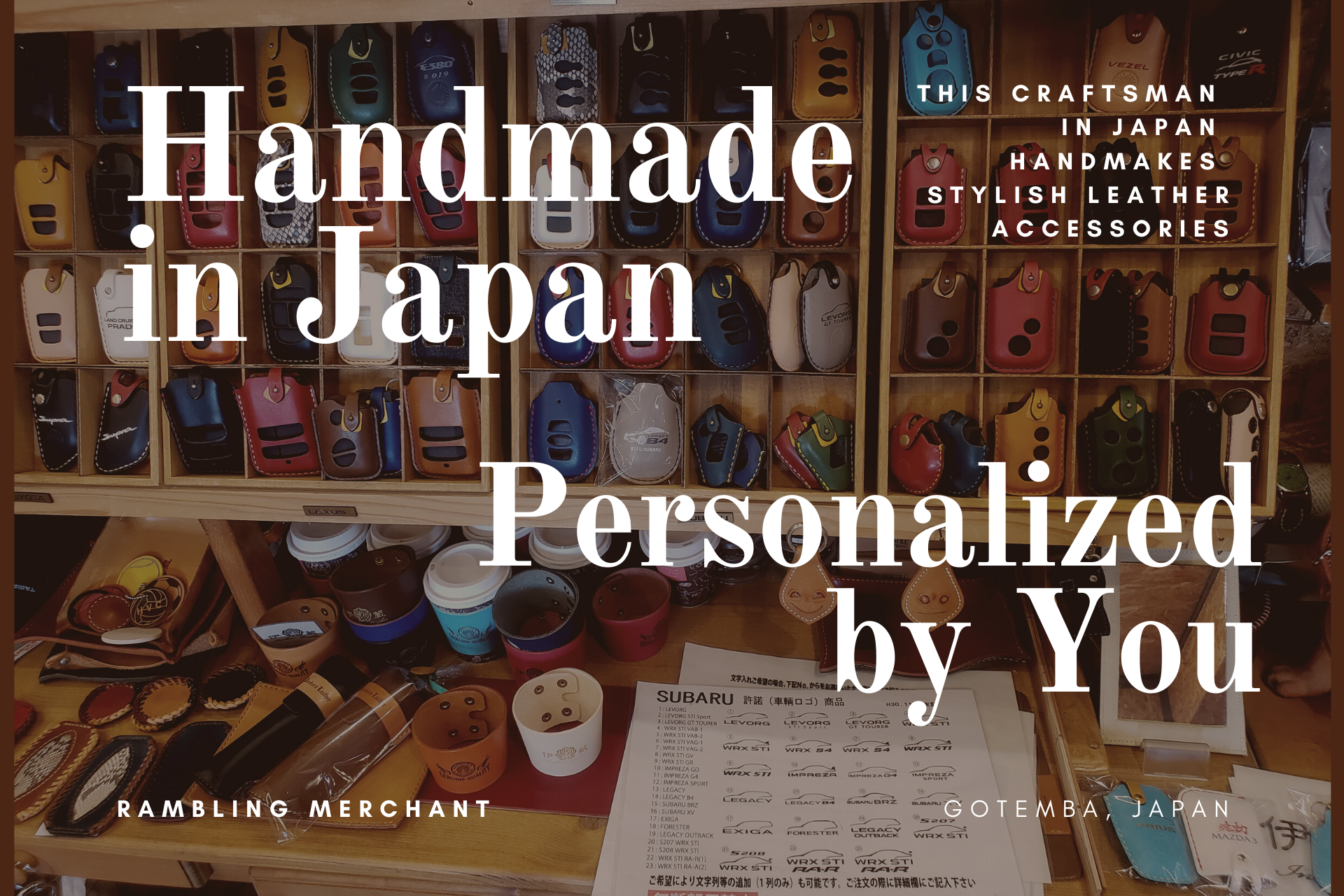
The history of leatherworking in Japan dates back over 2000 years ago. Immigrants from the Korean Peninsula brought the knowledge of tanning to what is known today as the Hyogo Prefecture. “Japanese White Leather”, also known as Himeji leather or Hyogo leather is world famous and is tanned using these traditional techniques in Hyogo prefecture. It has been renowned throughout history for its high quality. Learn more about Himeji Leather here or browse our leather products here!
Stone

At the end of the Nara Period (710-794) when Buddhism was introduced to Japan, stone became a utilitarian material and the art of stone carving began on the island. High quality granite was found near Kyoto which was perfect for carving. Thus like many other crafts, stoneworking found its home in Kyoto. Stoneworking played a major part in the building of the Imperial Palace in Kyoto when the capital was moved there. The importance of stonework in Buddhism can be seen from the myriad stone crafts at temples. From lanterns, to stepping stones, to towers, stone plays a significant role in any temple.