Rainy season in Japan is an inevitable annual ritual of trying to spend as little time outside as possible and locate the places nearest the AC units inside of whatever building you are currently in. For tourists, it can come as an unwelcome surprise to come during their early summer holiday to find not a clear day on their calendar to enjoy outdoor activities.
Following the cherry blossom season, which is arguably the best season in Japan, comes the humidity. Imagine beautiful blossoms, warm temperatures that allow for a light jacket to be adorned in the evening, and plenty of clear skies.
Now imagine clouds, wind, and rain most days, especially days when you do laundry and have to hang your clothes out to dry. Even when the rain isn’t falling you still feel wet. That’s the humidity. The air is thick, and the AC is weak. That other wet feeling is your sweat.
Which sounds more pleasant, cherry blossom season or the rainy season that follows not long after?
Japan’s Rainy Season

Rainy season is survivable, but the degree to which it is depends on if the building you work in and your apartment have decent AC units. The air is humid to the point that you always feel wet. It’s also warm. Rainy with 70-90 degree weather and excessive humidity can also lead to a lot of sweat.
Most Japanese people carry around towels to wipe the humidity and sweat from their brow and their arms. Many businesses are gracious enough to have a ‘cool biz’ dress code that allows employees to wear a dress shirt instead of a full suit and tie.
When is the Rainy Season?
Japan’s rainy season starts at different times in different regions of the country. The general start time of the rainy season is early June for most of the country. While Okinawa may start as early as the beginning of May, Hokkaido is the one true exception as it is far enough north that it avoids the rainy season all together and has a normal early summer.
The rainy season ends in mid-June in Okinawa and mid to late July for the rest of the country on average. After the rainy season, the rain and clouds may go away, but the heat rises and the humidity stays. That makes for another nightmare situation… which is a story for another time.
How to Survive the Rainy Season

The simple way is to stay indoors and appreciate the vast network of underground tunnels in Tokyo or a local craft shop. If you are a tourist, simply don’t come here in June or early July. Simple. But what if you want to visit Japan during this time or you live here?
Gear up. An umbrella in your car, an umbrella at your door, and a rain jacket to boot. Don’t forget the boots. Keep extra rain gear around – and an extra set of clothes in general when you go out. For foreigners, bring extra antiperspirant with you (I get my usual American brand off of US Amazon).
Rain-proof gear isn’t hard to find at department stores as well as small, packable umbrellas. Larger umbrellas – the clear ones are my favorite – and ponchos can be found for reasonable prices at convenience stores should you find yourself out and about when it starts raining.
2021: Japan’s Earliest Rainy Season on Record
The tentative start date for the rainy season in some parts of Japan has been called for mid-May (subject to change if it’s just a fluky few days and not the full-on start). This is the earliest the season has been called to start since they started keeping track in the 1951. This follows an unusually early cherry blossom peak bloom around the country this year as well.
The worst part of the early start? It doesn’t necessarily mean an early end. We’re not just ‘getting it over with’ early this year, we’re adding an extra 3 weeks of grey skies and suffering. Historically, when the rainy season starts early, it still ends during its usual time of mid to late July.
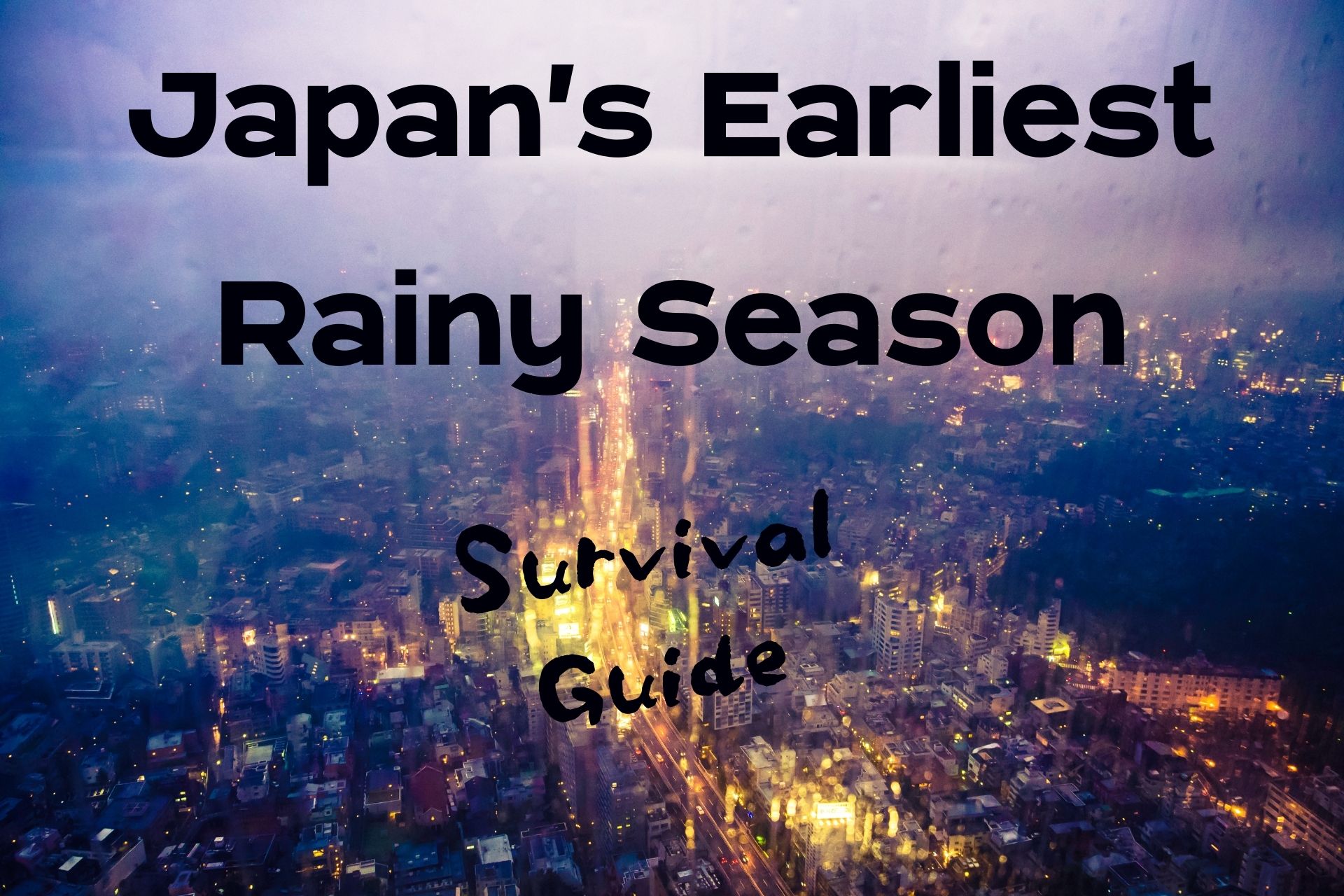
Fewer crowds on the street is one of the few benefits of the rainy season that you may find. The rain has its aesthetic though, and the cities and their neon lights look exceptionally beautiful at night and there’s just something about the inaka when it’s raining over the fields.